

Overview
Purpose of the CERS Interpretive Guide
The California Educator Reporting System (CERS) Interpretive Guide is designed to help educators and other interest holders interpret and explain CAASPP and ELPAC interim and summative assessment results. This guide provides guidance to consider when analyzing summative assessment data for use in accountability purposes and analyzing interim assessment data for use in making decisions about classroom instruction.
Appendix A provides a list of helpful resources that support the use of interim assessments. Appendix B provides samples of Individual Score Reports (ISRs) for use in student and parent/guardian discussions.
Overview of the Smarter Balanced Assessment System
The Smarter Balanced Assessment System provides three different assessment resources (figure 1): (1) summative assessments, (2) interim assessments, and (3) Tools for Teachers to support classroom formative assessment practices. Each part of the System is designed using principles that emphasize fairness, accessibility, and the use of evidence-based practices.
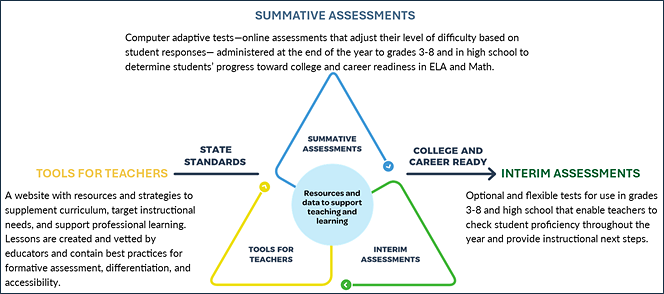
Figure 1. Smarter Balanced Assessment System
The Smarter Balanced Assessment System is a valid, fair, and reliable approach to student assessment that provides meaningful results with actionable data for educators, students, and parents/guardians to help students succeed. The system is aligned to the Common Core State Standards for English language arts/literacy (ELA) and mathematics. Persons who administer the Smarter Balanced Summative Assessment also have access to the interim assessments and Tools for Teachers as well. If there is any question about access, your local educational agency (LEA) representative can share policy regarding these offerings.
The Smarter Balanced Summative Assessments are administered as an accountability measure, at the end of the year to determine students’ progress toward college and career readiness in ELA and mathematics. In contrast, interim assessments are administered throughout the year in support of the formative assessment process.
All Smarter Balanced test items for the summative and interim assessments are developed using the ELA and mathematics performance tasks (PTs) and item specifications and the same item writing, review, and field testing processes. Smarter Balanced assessment items are developed through collaboration with kindergarten through grade twelve educators and higher education faculty. Items on interim assessments are selected from the same pool of items as the summative assessment items.
Educator involvement in the development of summative, interim, and formative assessment resources is critical. Since 2011, hundreds of teachers from multiple states have contributed to each step of the development, from writing test questions to creating the instructional resources. Additionally, assessment content undergoes bias and sensitivity reviews to be inclusive and representative of diverse student populations across the Consortium.
Summative Assessments
The Smarter Balanced Summative Assessments are available in ELA and mathematics to students in grades three through eight and high school. Each content area of the computer-based assessment consists of a computer adaptive test (CAT) as well as a PT. Summative assessments are administered in a standardized manner in accordance with the policies described in the CAASPP Online Test Administration Manual and the ELPAC Online Test Administration Manual.
California adopted the Smarter Balanced adjusted-form blueprints starting in the 2020–21 test administration. The adjusted CAT blueprint requires that students respond to fewer items while maintaining the content coverage of the full-form assessment. The primary difference is that the adjusted form does not allow for individual student claim-level results to be reported because there are not enough items in each claim to report on them with precision. To learn about composite results when using the adjusted blueprint, refer to section 6.1 MLE Scoring for Claim Scores of the Smarter Balanced Scoring Specifications for Summative and Interim Assessments.
Interim Assessments
The Smarter Balanced Interim Assessments are available in ELA and mathematics to students in grades three through eight and high school. Unlike the Smarter Balanced Summative Assessments (which are adaptive), the interim assessments are optional fixed-form assessments, which means that each student has access to the same test questions and the assessments do not adapt according to student responses. Because each student responds to the same test items, teachers may more easily interpret their students’ performance on a common set of items. Further, teachers can better manage hand scoring since all students respond to the same constructed-response questions.
Administration of the interim assessments is flexible and can serve a variety of educator and student needs. Schools and LEAs may establish time frames, administration policies, and scoring practices for the interim assessments, keeping in mind any guidance from their own state department of education. Educators can use the interim assessments in a standardized manner as an assessment of learning after a period of instruction, or in a nonstandardized manner (for example, teaching tool, warm-up activity) as an assessment for learning. The interim assessments also include all the accessibility resources that are available in the summative assessments to provide accurate results for all students. The interim assessments are powerful resources to improve teaching and learning for all students.
“Assessment has two fundamental purposes: one is to provide information about student learning minute-by-minute, day-to-day, and week-to-week so teachers can continuously adapt instruction to meet students’ specific needs and secure progress. This type of assessment is intended to assist learning and is often referred to as formative assessment or assessment for learning. A second purpose of assessment is to provide information on students’ current levels of achievement after a period of learning has occurred. Such assessments – which may be classroom-based, districtwide, or statewide – serve a summative purpose and are sometimes referred to as assessments of learning.”
Overview of CAST
The California Science Test (CAST) is a valid, fair, and reliable approach to student assessment that provides meaningful results with actionable data for educators, students, and parents/guardians to help students succeed. The system is aligned with the California Next Generation Science Standards and consists of three components—summative assessments, interim assessments, and Tools for Teachers—all designed to improve teaching and learning.
The summative CAST is administered by local educational agencies, as an accountability measure, at the end of the academic year to determine students’ progress toward college and career readiness in science. The CAST Interim Assessments and Tools for Teachers support the formative assessment process and can be administered throughout the academic year.
All CAST items for the summative and interim assessments are developed using the item content specifications and undergo the same item writing, review, and field testing processes. Both the summative CAST and CAST Interim Assessment items are developed through collaboration with kindergarten through grade twelve educators and the California Department of Education.
Educator involvement in the development of summative, interim, and formative assessment resources is critical. Since 2016, hundreds of teachers from the state of California have contributed to each step of the development, including providing item feedback, writing test items, and creating instructional resources.
Overview of the CAAs
The California Alternate Assessments (CAAs) provide a valid, fair, and reliable way to measure what students with the most significant cognitive disabilities know and can do. These assessments offer meaningful results and actionable data for educators, students, and parents/guardians to support student learning and success. The CAA system is aligned with the California Common Core State Standards for English language arts/literacy (ELA) and mathematics, and the California Next Generation Science Standards for science. It includes summative assessments and instructional resources designed to improve teaching and learning for students who require alternate formats.
The summative CAAs are administered annually by local educational agencies as part of California’s accountability system. They help determine student progress toward grade-level standards and readiness for postsecondary opportunities. The assessments are tailored to meet the needs of students with significant cognitive disabilities through simplified language, visual supports, and scaffolded tasks.
All CAA items are developed using rigorous item content specifications and undergo a comprehensive process of item writing, review, and field testing. The development of these assessments is a collaborative effort between California educators and the California Department of Education, ensuring that the content is both accessible and instructionally relevant.
Educator involvement is essential to the success of the CAAs. Since its inception, hundreds of teachers across California have contributed to the development process by writing test items, reviewing content, and creating instructional supports that reflect best practices in special education and inclusive assessment design.
Overview of the CSA
The California Spanish Assessment (CSA) is a valid, fair, and reliable measure of Spanish language skills that provides meaningful results and actionable data for educators, students, and parents/guardians. Designed to support biliteracy and language development, the CSA helps students demonstrate their proficiency in Spanish reading/language arts inclusive of reading, writing, and listening for all tested grade levels and, for the high school grade band, speaking. The assessment is aligned with the California Common Core State Standards en Español and is intended for students who are learning Spanish or who are fluent Spanish speakers.
The CSA is administered annually by local educational agencies and is available to students in grades three through twelve. Participation is voluntary and provides valuable insights into students’ progress in Spanish language arts, supporting efforts to promote multilingualism and cultural understanding.
All CSA items are developed using rigorous content specifications and undergo a thorough process of item writing, review, and field testing. The development process is a collaborative effort between California educators and the California Department of Education, ensuring that the assessment reflects high-quality instruction and authentic language use.
Educator involvement is central to the success of the CSA. Since its launch, teachers from across California have contributed to every stage of development—writing test items, reviewing content, and creating instructional resources that support Spanish language learning and biliteracy goals.
Overview of the ELPAC System
The English Language Proficiency Assessments for California (ELPAC) is the state’s English language proficiency (ELP) assessment for students in kindergarten through grade twelve. ELPAC consists of the Initial ELPAC, Summative ELPAC, Initial Alternate ELPAC, Summative Alternate ELPAC, and ELPAC Interim Assessments.
- The assessments are aligned with the 2012 California English Language Development Standards, and each measures one of the four domains of Listening, Speaking, Reading, and Writing.
- The Initial ELPAC is used to assess ELP for initial identification of a student new to California public schools as either an English learner (EL) who needs support to learn English or as initial fluent English proficient. For students classified as ELs on the basis of Initial ELPAC performance, the annual Summative ELPAC is used to measure students’ progress toward ELP and to determine whether they are ready to be reclassified. Note that results for the Initial ELPAC are not reported in CERS.
- The Summative ELPAC is administered annually by local educational agencies, as an accountability measure to determine students’ progress toward college and career readiness in ELP.
- The Initial Alternate ELPAC is used to identify the initial ELP level of students with the most significant cognitive disabilities whose individualized education program designates use of an alternate assessment. It determines whether a student is an EL or initial fluent English proficient. The assessment measures receptive and expressive communication in the domains of Listening, Speaking, Reading, and Writing, using simplified, accessible tasks appropriate for this student population. Note that results for the Initial Alternate ELPAC are not reported in CERS.
- The Summative Alternate ELPAC is used to assess ELP for students with the most significant cognitive disabilities who are identified as ELs. It is administered annually to measure progress in acquiring English and to help determine whether a student is ready to be reclassified. This assessment provides an alternate pathway for eligible students to demonstrate growth in Listening, Speaking, Reading, and Writing in English.
All ELPAC items for the summative and interim assessments are developed using the item writing specifications and the same item writing, review, and field testing process. Items for interim assessments are developed using the same criteria as items on the summative assessments.
All assessments in the ELPAC System are developed through collaboration with kindergarten through grade twelve educators and the California Department of Education. Educator involvement in the development of summative and interim resources is critical. Since the launch of ELPAC, hundreds of teachers from the state of California have contributed to each step of the development, including providing item feedback, writing test items, and reviewing field test data.
Accessibility Resources
The CAASPP and ELPAC are designed so that all students can meaningfully participate in the assessments. As a result, all assessments provide a wide range of resources (universal tools, designated supports, and accommodations) designed to meet the individual needs of students and remove access barriers—allowing participating students to demonstrate what they know and can do.
These accessibility resources include, but are not limited to, the following:
- Desmos calculator
- Braille
- Spanish translations (mathematics and science only)
- Videos in American Sign Language
- Glossaries provided in 13 languages and several varieties and dialects
- Translated test directions in 20 languages
Each of these accessibility resources was built with students in mind. Additional details on accessibility resources can be found in the Accessibility Guide.