

Appendix A: Resources to Support the Use of Interim Assessments
These sources can be used to improve assessment literacy and to create a system of formative assessment that links interim assessment data to instruction.
- The Content Explorer provides information about the claims and targets assessed on the interim and summative assessments.
- The item and task specifications provide guidance on how to translate the Smarter Balanced content specifications into actual assessment items.
- The interim assessment test blueprints provide information about the claims and targets assessed on each Interim Assessment Block (IAB) and Focused IAB (FIAB), the number of items, and the depth of knowledge (DOK) for the items.
- The summative assessment test blueprints provide information about the claims and targets assessed on each Interim Comprehensive Assessment (ICA) and the DOK (for the items). However, because the ICAs are fixed-form assessments, the number of items on an ICA is not a range as noted on the summative blueprints.
- Tools for Teachers Interim Connections Playlists provide instructional resources that can be accessed through a link on the interim assessment reports in the California Educator Reporting System or directly through the Tools for Teachers website.
- Tools for Teachers includes instructional and professional learning resources created and vetted by educators for educators to support the use of the formative assessment process during instruction and help save teachers’ time.
Smarter Balanced Test Blueprints
IAB blueprints are available for both English language arts/literacy (ELA) and mathematics for both IABs and FIABs. The IAB blueprints contain information that will help educators understand the content of each IAB. Each blueprint includes the following:
- The IABs available for each grade level
- The number of items included in each IAB
- The focus of each IAB, including information about the following:
- Claim(s)
- Assessment target(s) and the emphasis of each target relative to other targets in the block
- DOK level(s) addressed by items
- The number of items by type (for ELA only—for example, short text, machine-scored)
The Interim Assessment Overview provides information about how IABs might be effectively integrated within classroom instruction. The Interim Assessment Overview and Blueprints for IABs in ELA mathematics can be found on the Test Development & Design web page of the Smarter Content Explorer.
ICA blueprints are available for both ELA and mathematics. The ICA blueprints contain information that will help educators understand the content of each ICA. The blueprint includes the following:
- The ICAs available for each grade level
- The number of items included in each ICA
- The assessed content in each ICA, including information about the following:
- Claims
- Assessment targets and the emphasis of each target relative to the other targets
- DOK levels addressed by items
- The number of items by type (for ELA only—for example, hand scored, machine-scored)
The ICAs measure similar content to the summative assessment and may be helpful for determining the knowledge and skills of students who are new to the local educational agency or the state. ICAs can also provide information about students’ knowledge and skills after a significant period of instruction.
The Interim Assessment Overview and Blueprints for ICAs in ELA and mathematics can be found on the Test Development & Design web page of the Smarter Content Explorer.
Full-form and adjusted-form summative assessment blueprints are available for both ELA and mathematics. The summative assessment blueprints contain information that will help educators understand the content of each summative assessment.
Each summative assessment blueprint includes information about the following:
- Claims
- Assessment targets and the emphasis of each target relative to the other targets
- DOK levels addressed by items
- The types of items (for ELA only—for example, short text, machine-scored)
The full-form and adjusted-form Summative Assessment Blueprints for ELA and mathematics can be found on the Test Development & Design web page of the Smarter Content Explorer.
Sample Use of the IAB Blueprints
A grade five teacher wishes to determine the writing expectations for students who will take the ELA IABs. After reading the blueprints, the teacher understands that the Revision IAB is composed of 15 machine-scored items and that students are expected to revise narrative, informational, and opinion texts, as shown in figure 1.
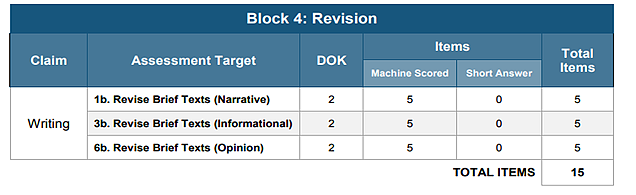
Figure 1. Grade Five Block 4 IAB: Revision
Looking further, the teacher finds another IAB on writing brief texts composed of six short-answer items across the same three writing purposes, each requiring hand scoring, as shown in figure 2.
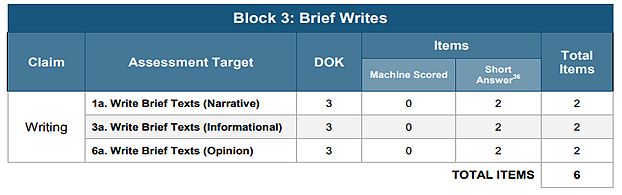
Figure 2. Grade Five Block 3 IAB: Brief Writes
These items are designed for hand scoring and may be artificial intelligence–scored with an application that yields comparable results by meeting or exceeding reliability and validity criteria for hand scoring.
The teacher also finds a performance task (PT) that deals solely with research and narrative writing. It includes one machine-scored and three human-scored items, as shown in figure 3.
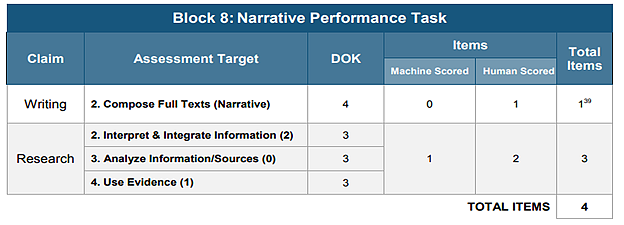
Figure 3. Grade Five Block 8 IAB: Performance Task
The Writing PT score is derived from a single student response scored on three distinct traits. There are also two or three Research items in each PT, for a total of three or four items per task.
Given the differences in class time required to administer each IAB and the amount of time needed to score them, the teacher decides which IAB best meets the instructional needs of the class.
CAST Interim Assessment Blueprint
The California Science Test (CAST) Interim Assessment blueprint is presented as three interim assessments per grade band.
Table 1 provides a summary of the interim assessments available for each grade band. Each of the CAST Interim Assessments in middle school and high school will align with and explore a single science domain: Earth and Space Sciences (ESS), Life Sciences (LS), or Physical Sciences (PS). Each elementary school CAST Interim Assessment will align with and explore the performance expectations (PEs) of all three science domains (ESS, LS, and PS) in each specific grade level (that is, grade three, four, or five). The engineering subdomain (ETS) is subsumed in the three science domains. California’s Environmental Principles and Concepts will also be used as context for items, when appropriate for the assessed PE.
The blueprint provides a summary of the number of discrete items and performance tasks (PTs) included in each CAST Interim Assessment for all grade levels and grade bands. Each CAST Interim Assessment will consist of two segments: one discrete segment and one PT segment. The PT consists of four to six items, including one constructed-response item worth 2 points that must be hand scored.
| Grade Level or Grade Band | Domain(s) Assessed | Number of Discrete Items | Number of PTs | Total Items | Points |
|---|---|---|---|---|---|
|
Grade 3 |
ESS, LS, PS |
9 |
1 |
13 to 15 |
14 to 18 |
|
Grade 4 |
ESS, LS, PS |
9 |
1 |
13 to 15 |
14 to 18 |
|
Grade 5 |
ESS, LS, PS |
9 |
1 |
13 to 15 |
14 to 18 |
|
Middle School |
ESS |
9 |
1 |
13 to 15 |
14 to 18 |
|
Middle School |
LS |
9 |
1 |
13 to 15 |
14 to 18 |
|
Middle School |
PS |
9 |
1 |
13 to 15 |
14 to 18 |
|
High School |
ESS |
10 |
1 |
14 to 16 |
15 to 19 |
|
High School |
LS |
10 |
1 |
14 to 16 |
15 to 19 |
|
High School |
PS |
10 |
1 |
14 to 16 |
15 to 19 |
Like the summative CAST, items on the interim assessments are aligned with the California Next Generation Science Standards (CA NGSS). The blueprint for the CAST Interim Assessments outlines how the CAST Interim Assessment test forms will be assembled, including rules for the assessment of the CA NGSS PEs and the integration of the disciplinary core ideas (DCIs), science and engineering practices (SEPs), and crosscutting concepts (CCCs).
Use of the CAST Interim Assessment Blueprint
After reading the blueprint, elementary school educators can understand the distribution of items by science domain and DCI strand for the grades three, four, and five interim assessments. The grades three, four, and five interim assessments draw on PEs from the specific grade level, which build on the foundational concepts addressed in kindergarten through grade two.
Middle school and high school educators can understand the distribution of items by science domain and DCI strand of the CAST Interim Assessments for middle school and high school. Each domain-specific interim assessment will have sufficient items and points to support the domain-specific claims. Each interim assessment draws on PEs within a domain across several grade levels. The middle school interim assessments draw on all middle school PEs, and the high school interim assessments draw on all high school PEs.
Note that 90 percent of PEs in the grade-level or grand-band domain are assessed over the two forms for that grade level or grade band.
The blueprint for CAST Interim Assessments is available for reference; refer to the California Science Test Interim Assessments Blueprint.
CAST Summative Blueprint
The CAST summative blueprint is available for reference; refer to the California Science Test Revised Blueprint. The summative assessment blueprint contains information that will help educators understand the content of the summative assessment.
The CAST summative blueprint includes information about the following:
- Assembled test forms, including the number of segments, items, and score points on each assessment
- Rules for the assessment and distribution of PEs, DCIs, SEPs, and CCCs at each grade band
- CAST claims, which represent the four domains covered across the CAST Interim Assessments
ELPAC Interim Assessment Blueprint
The English Language Proficiency Assessments for California (ELPAC) Interim Assessment blueprints are presented by grade level or grade span for kindergarten through grade span eleven and twelve. The blueprints contain information that will help educators understand the content of each interim assessment.
Each interim assessment blueprint includes information about the
- number of items and points per task type in the ELPAC Interim Assessments I and II;
- primary and secondary 2012 California English Language Development (ELD) Standards aligned with each task type; and
- number of items per task type, set description, and item type.
The blueprints for ELPAC Interim Assessments can be found in the English Language Proficiency Assessments for California Interim Assessment Blueprints.
The Summative ELPAC blueprints are available for reference. The test blueprints for the Summative ELPAC can be found in the Test Blueprints for the Summative English Language Proficiency Assessments for California.
Sample Use of ELPAC Interim Assessment Blueprints
A grade six teacher wishes to determine the speaking expectations for students who will take an ELPAC Interim Assessment for Speaking. After reading the interim assessment blueprints, the teacher understands that an interim assessment for Speaking is composed of five task types with a total of eight items and that students are expected to talk about a scene, respond with a statement or question that is appropriate for a situation, support an opinion, present and discuss information, and summarize an academic presentation, as shown in table 2. (The number of items and number of points apply to the item sets within ELPAC Interim I assessments and ELPAC Interim II assessments.)
| Task Type | Aligned Primary ELD Standard(s) | Aligned Secondary ELD Standards | Discrete Item or Set Description, Item Type, and Point Value | Speaking Items | Speaking Points |
|---|---|---|---|---|---|
|
Talk About a Scene |
PI.A.1 |
PII.B.3, PII.B.4, PII.B.5 |
Set of 4 items, constructed response (CR), 6 points per set |
4 |
6 |
|
Speech Functions |
PI.A.1 |
PII.B.3, PII.B.4, PII.B.5 |
Discrete, CR, 2 points per item |
1 |
2 |
|
Support an Opinion |
PI.A.3 |
PII.B.3, PII.B.4, PII.B.5, PII.C.6 |
Discrete, CR, 3 points per item |
1 |
3 |
|
Present and Discuss Information (Speaking with Reading) |
PI.C.9, PI.A.3 |
PI.B.6, PII.A.2, PII.B.3, PII.B.4, PII.B.5, PII.C.6 |
Discrete, CR, 3 points per item |
1 |
3 |
|
Summarize an Academic Presentation (Speaking with Listening) |
PI.C.9 |
PI.B.5, PII.A.2, PII.B.3, PII.B.4, PII.B.5, PII.C.6, PII.C.7 |
Discrete, CR, 4 points per item |
1 |
4 |
| Totals: | N/A | N/A | N/A | 8 | 18 |